
How to Choose a Brass Diya for Diwali
By Pancham Crafts · 1 October 2026 · 5 min read
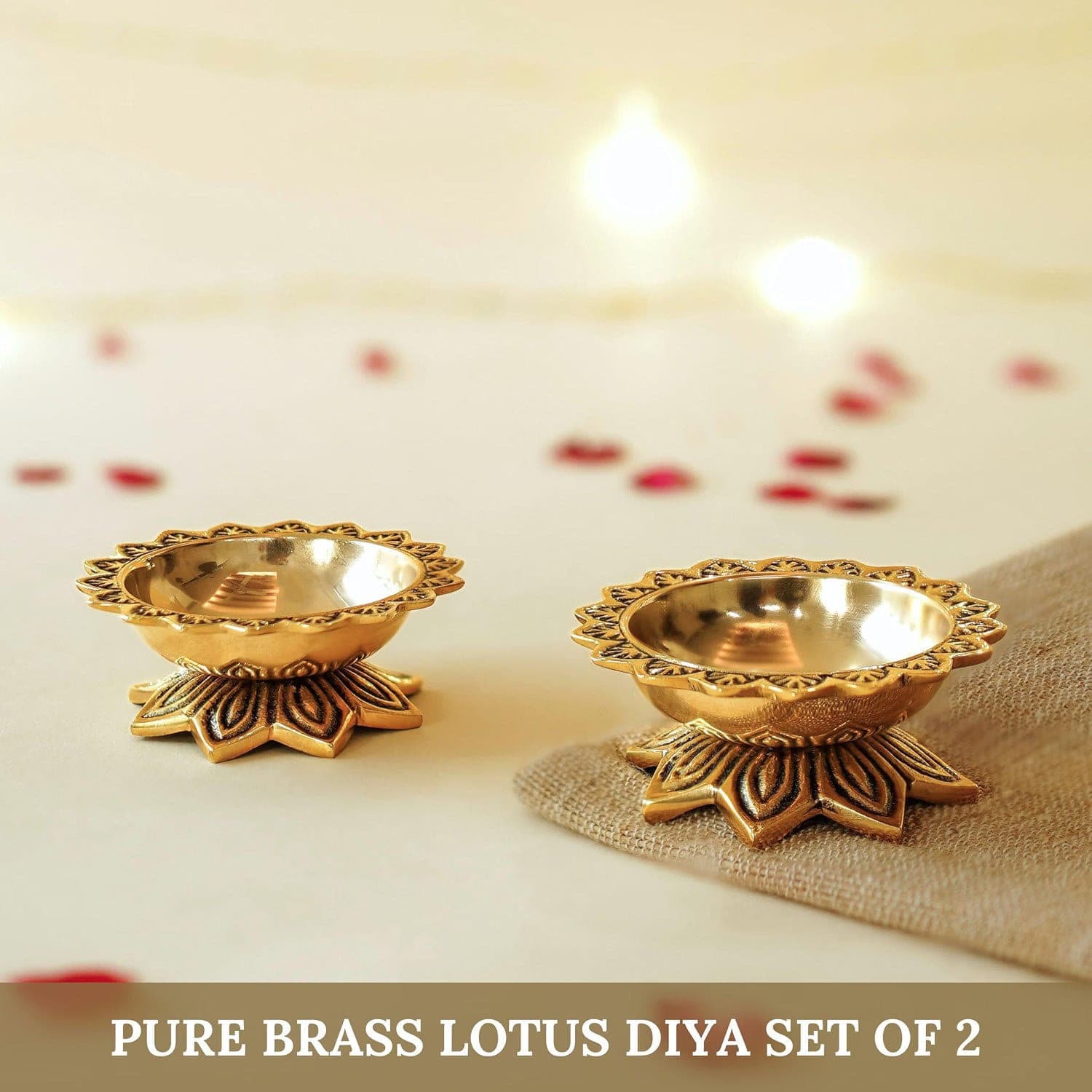
Diwali falls on 8 November in 2026, and the diya is the one thing nobody skips. But "brass diya" covers everything from a 3 cm hand diya to a 25 cm standing lamp, and they are not interchangeable — the right one depends on where it will sit, how long you need it to burn, and whether anyone has to carry it.
This is a practical guide to picking one, written around the pieces we actually stock in Diyas and Puja Items.
Start with where it will stand
Almost every regret we hear about comes down to size. A diya that looks generous in a photograph can be smaller than a teacup in person.
- Doorway and balcony edges — you want something low and stable that will not tip in a draught. A small hand diya around 3 cm tall, like the Brass Diya with Curved Handle, sits flat and disappears into the step rather than dominating it.
- Mandir or puja shelf — height earns its place here, because the lamp is meant to be seen. A twin diya on a raised stand, or a standing lamp, reads properly against a wall.
- Floor beside an entrance — this is where the tall pieces belong. A 10-inch standing lamp is 25.4 cm; a 9-inch pair stands 22.9 cm. Put either on a shelf and it will crowd everything around it.
Measure the shelf before you order. Every listing on this site gives real dimensions in centimetres, because a photograph cannot tell you whether something is 6 cm or 16 cm.
Then decide how long it needs to burn
This is the question most people do not think about until the evening itself.
An akhand diya is designed to stay lit — the name means unbroken. It holds a deeper oil reservoir and is the right choice for a vrat, an all-night observance, or simply not wanting to refill anything during an evening with guests. The Brass Akhand Diya set of two is 5 cm tall with a 7 cm bowl, and the two-piece set matters more than it sounds: lighting a pair either side of a doorway is the common arrangement.
A standard diya holds enough oil for an hour or two. That is fine for aarti and for a decorated entrance, and it is easier to clean.
A panch diya has five wick points in one body. It gives five flames from one piece and one pour of oil, which is why it is a mainstay of aarti — the Panch Aarti Diya with Handle is built for exactly that.
Does anyone have to hold it?
If the diya is for aarti, somebody is holding it while it is lit, and brass conducts heat.
A handle is not decoration here. A wooden handle stays cool in the hand no matter how long the flame has been burning — that is the whole point of the Brass Diya with Wooden Handle and the Panch Diya with Wooden Handle. A brass curved handle is lighter and looks cleaner, but it warms up.
For a diya that will only ever sit on a surface, skip the handle and spend the difference on size or weight instead.
Weight tells you more than price
Brass is sold by weight, and weight is the honest signal of how much metal is in a piece.
The hand diyas here run between 80 g and 121 g. That is a real difference you can feel — the 121 g piece sits heavier and is harder to knock over. Where we know a piece's weight it is printed on the listing, and where we do not, we have left it blank rather than guessing.
Be careful comparing a set against a single item. A "set of 2" at ₹899 is two pieces; a single diya at ₹749 is one. The per-piece price is often the opposite of what the headline suggests.
Oil or ghee?
Both work. Ghee burns cleaner and with less smell, and is traditional for puja. Mustard or sesame oil burns longer for the same volume and costs less, which matters if you are lighting a dozen diyas down a balcony.
Whichever you use, cotton wicks soak faster than synthetic ones and will not smoke the same way. Let the wick sit in the oil for a minute before lighting it — a dry wick burns itself rather than the fuel, and goes out early.
A short checklist before you order
- Measure the shelf, step or niche. Then check the centimetres on the listing.
- Decide the burn time. All night means akhand. An hour means standard.
- Decide whether it gets carried. If yes, wooden handle.
- Count the pieces. Compare per piece, not per listing.
- Order early. Diwali deliveries get slower the closer you leave it, and the pieces people want most go first.
What about keeping it bright?
Brass darkens with time and handling. Many people prefer it that way and leave it alone; if you want the shine back, it comes back. We have written that up separately in how to clean brass at home — it is worth reading before you reach for anything abrasive, because the wrong thing will scratch a polished surface permanently.
Browse the full range in Diyas, or see the rest of the festival pieces — thalis, bells, kalash and chowki stands — in Puja Items. Everything ships across India, there is no minimum order, and you can order a single diya if that is all you want.